Prescription Discount Card vs. Insurance: Which Actually Saves You More in 2026?
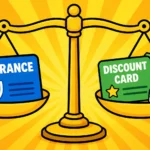
Navigating the landscape of American healthcare in 2026 has become increasingly daunting. Families are currently facing a dual challenge: skyrocketing medication costs and a healthcare system that often feels more like a maze than a safety net. With over 350 major drug price hikes recorded in the first half of this year alone, it is no surprise that nearly 60% of adults report being deeply worried about their ability to afford essential prescriptions.
For many, the standard response is to reach for an insurance card. However, a growing number of savvy consumers are discovering that their insurance copay might actually be the more expensive option. Choosing between a prescription discount card and traditional insurance is no longer a simple decision; it requires a strategic understanding of how pharmacy pricing truly functions.
The Mechanics of Pharmacy Pricing: Why Costs Vary
To understand why a "discount" could beat "coverage," one must look at how pharmacies set their prices. Every medication has three distinct price points:
- The Cash Price: This is the "sticker price" the pharmacy charges if you have no assistance. It is often exorbitant and rarely reflects the actual cost of the drug.
- The Insurance Negotiated Rate: This is the price your insurance provider has agreed to pay the pharmacy. Your copay is usually a fixed portion of this rate, or a percentage (coinsurance).
- The Discount Card Price: Programs like YourDrugCard.com leverage the collective buying power of millions of users to negotiate separate, lower cash prices directly with pharmacy chains.
Because discount cards operate outside the traditional insurance bureaucracy, they can often secure a price for generic medications that is significantly lower than an insurance company’s set copay.
When the Prescription Discount Card Wins

There are several scenarios where using a prescription discount card is the clear financial victor over insurance. If you find yourself in any of the following categories, you are likely overpaying by using your insurance card:
- High-Deductible Health Plans (HDHPs): Many modern plans require individuals to pay thousands of dollars out of pocket before coverage kicks in. If you are in this "deductible phase," your insurance might "negotiate" a price of $100 for a generic drug. A discount card could potentially provide that same drug for $20.
- The Medicare "Donut Hole": For seniors, the gap in coverage known as the donut hole can lead to staggering out-of-pocket costs. A discount card provides a vital safety net during this period.
- Non-Covered Medications: Insurance formularies change constantly. If your plan suddenly stops covering a specific medication, a discount card is often the only way to avoid paying the full retail cash price.
- High Generic Copays: Some insurance plans have a minimum copay (e.g., $15 or $20). If the actual cost of the generic drug is only $8, the insurance company keeps the difference. A discount card allows you to pay the true, lower price.
Real-World Math: $150 vs. $45
To put this into perspective, let’s look at a common generic medication used to treat high cholesterol. In 2026, a patient with a mid-tier insurance plan might be asked to pay a $150 coinsurance fee because they haven't met their deductible.
By simply presenting a free prescription discount card, that same patient could see the price drop to $45.

Comparison Table: Generic Statins (Monthly Supply)
| Pricing Method | Typical Cost in 2026 | Counts Toward Deductible? |
|---|---|---|
| Retail Cash Price | $210.00 | No |
| Insurance Copay (Tier 3) | $150.00 | Yes |
| YourDrugCard.com Price | $45.00 | No |
The trade-off is clear: while the insurance payment counts toward your yearly deductible, the immediate burden is three times higher. For families struggling with monthly cash flow, the $105 in instant savings is often the more practical choice.
When Insurance is Still the Better Option

Despite the power of discount cards, insurance remains a critical tool for catastrophic coverage. You should prioritize using your insurance card in these specific instances:
- Expensive Specialty Drugs: For biologics or complex cancer treatments that cost thousands per month, insurance (especially after a deductible is met) is the only way to cap your costs. No discount card can compete with a $0 copay once you hit your out-of-pocket maximum.
- Hitting the 2026 Medicare Cap: In 2026, Medicare Part D out-of-pocket drug costs are capped at $2,100. If you take several expensive medications, it may be wiser to pay the higher insurance prices early in the year to reach that cap quickly. Once reached, your medications are essentially free for the remainder of the year.
- Low Copay Plans: If your plan offers "Tier 1" generics for $0 or $5, you are already getting the best possible deal.
The Smart Strategy: A Tool for Every Wallet
The most effective way to manage healthcare costs is not to choose one or the other, but to carry both. A prescription discount card is a zero-risk tool because it costs nothing to carry and has no health restrictions.
At YourDrugCard.com, we provide a pre-activated card that is accepted at major pharmacies nationwide. It never expires and requires no paperwork or claims to file. It serves as your "Plan B" when insurance fails to provide an affordable price.

Furthermore, for those who are completely uninsured or find themselves burdened by the high cost of doctor visits, we offer Discount Medical Plan Organization (DMPO) services. For just $9.95 a month, an entire family can access negotiated discounts on:
- Doctor and Specialist Visits
- Dental and Vision Care
- Chiropractic Services
Summary: How to Decide at the Pharmacy Counter
When you arrive at the pharmacy counter in 2026, follow this simple three-step process to ensure you aren't being overcharged:
- Ask for the Insurance Price: Find out what your copay is.
- Ask for the "YourDrugCard" Price: Have the pharmacist run our card to see the discounted cash price.
- Compare and Choose: If the discount card saves you more money today, use it. If you are close to hitting your insurance deductible for the year, you might choose to pay the higher insurance price to trigger your full coverage sooner.
In an era of unpredictable healthcare shifts, the goal is transparency. By keeping a free prescription drug card in your wallet, you ensure that you always have the final say over what you pay for your health.